
Why DocuBay

Services

License & Compliance Management


Workforce & Employment

Permits & Approvals

Insurance & Risk Management

Legal Services

Audit, Tax & Accounting

Company Formation


26 Mar 2026
Common Legal Mistakes Small Businesses Make in the UAE

Legal mistakes in small businesses rarely begin with anything that looks obviously legal.
More often, they begin in the ordinary rush of running a business. A contract is reused because the deal feels straightforward. A renewal is left for later because the team is busy. A founder assumes the paperwork can catch up once the business is moving properly.
That is exactly why these issues are easy to miss.
For many SMEs in the UAE, legal risk does not arrive through one dramatic event. It builds quietly through unclear agreements, missed deadlines, weak documentation, and responsibilities that were never properly defined. By the time the problem becomes visible, it is usually affecting more than legal exposure alone. It is affecting payments, operations, control, and the confidence with which the business can keep moving.
That is often when a business realises the issue was never only legal. It was operational all along.
1. Using weak contracts

This is one of the most common mistakes small businesses make.
A deal feels straightforward, the other party seems reasonable, and both sides want to move quickly. So the agreement is rushed, copied from an old template, or reduced to a few basic terms without enough detail around scope, payment terms, delays, responsibilities, termination, or dispute handling.
That usually works until something changes.
When a payment is delayed, the scope expands, or the relationship becomes strained, the business discovers that the real problem is not only the dispute. It is the contract behind it.
For a small business, a strong contract does more than protect legal rights. It protects revenue, timelines, and commercial clarity. In practice, this is often where a business learns that speed and clarity are not the same thing.
2. Missing renewals and compliance deadlines
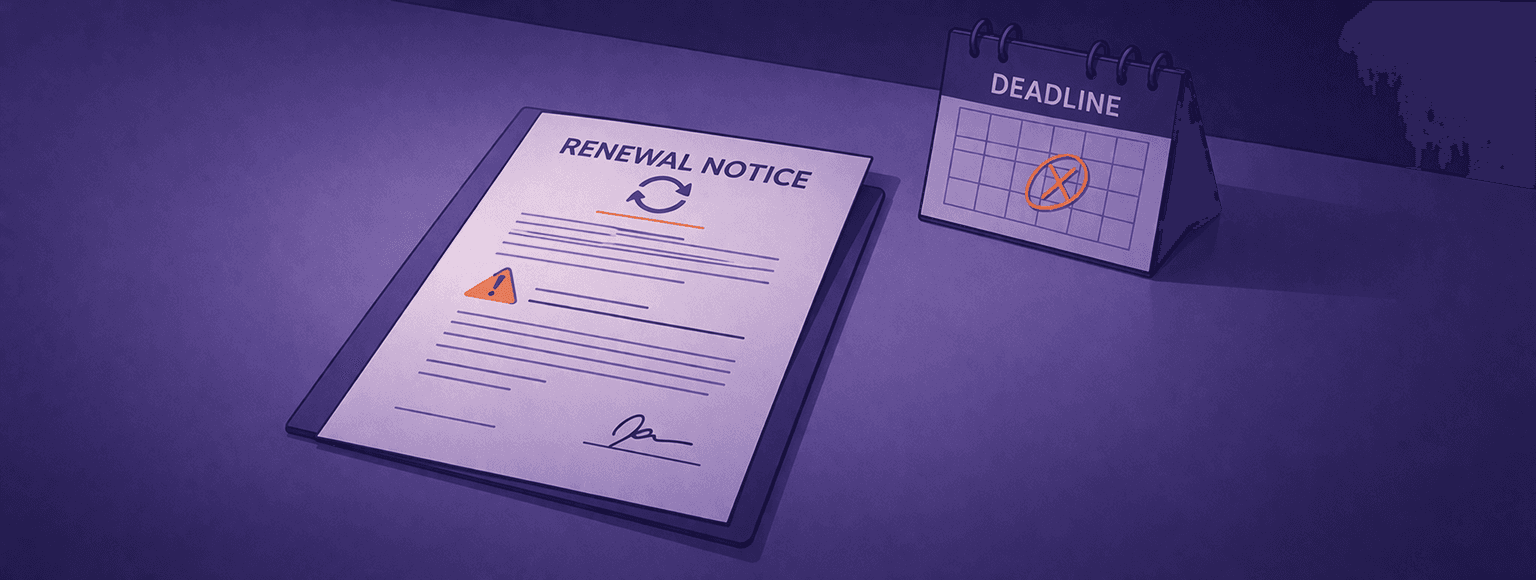
Not every legal problem starts with a major breach.
In many SMEs, the issue is simpler. A renewal date is missed. A permit review is delayed. A filing deadline slips because no one owns it clearly. What looks administrative at first can quickly affect operations, approvals, staffing, and business continuity.
This is where small businesses often get caught off guard. The legal risk is not only the deadline itself. It is the chain reaction that follows when an expired approval or missed renewal starts affecting the rest of the business. In practice, legal discipline often begins with deadline discipline. Renewals rarely feel strategic until the day a missed date starts interfering with everything around it.
3. Not fully understanding the business setup

Many small businesses assume that once the company is incorporated, the legal structure no longer needs much attention.
That is rarely the case.
In the UAE, the legal form, business activity, and operating setup all shape which rules, approvals, and obligations apply. A business may start in one way and then expand its services, add activities, or shift how it operates without properly reviewing whether its legal setup still matches what the business is actually doing.
That gap can create avoidable risk. For SMEs, this is a useful reminder: legal structure is not just a registration detail. It affects the compliance framework the business is operating within. A setup that looked right at the start can become less reliable as the business evolves.
4. Treating compliance as something to fix later

This is a familiar pattern in growing businesses.
The team is focused on customers, sales, hiring, and day-to-day delivery. Compliance gets treated as something to tidy up once the business is more settled. Records can be cleaned later. Processes can be tightened later. Finance can sort things out later.
That approach often creates bigger problems than expected.
By the time the business tries to organise compliance properly, the gaps are usually wider. Records are inconsistent. Approvals are unclear. Supporting documents are scattered. Responsibilities are not fully defined. What looks like a compliance issue later often begins as a process issue much earlier. That is one of the quieter realities of growth: businesses rarely struggle because structure is unimportant, but because it is postponed for too long.
5. Keeping weak records and relying on informal communication

Small businesses often move quickly because decisions happen fast.
That speed can be useful. It can also create risk when too much depends on verbal discussions, chat messages, or assumptions that never make it into proper records.
A payment term is agreed informally. A scope change is approved over messages. A role changes internally but is never documented clearly. Everyone feels aligned at the time, so the business moves on.
The problem appears later, when something needs to be proven. At that point, weak records do not just create confusion. They create vulnerability. Good documentation is not only about storage. It is about control, accountability, and being able to show what was agreed. A lot of small businesses discover this only when memory is no longer enough.
6. Leaving founder and partner arrangements too informal

This mistake often stays hidden until the business reaches a more serious stage.
In the early phase, founders or partners may trust each other enough to leave roles, expectations, or commercial arrangements loosely defined. It feels manageable because the business is still small and decisions are easy to make informally.
But once pressure increases, the gaps become clearer.
Who is responsible for what? How are key decisions made? What happens if one partner wants to exit? What if contributions are no longer equal? What if the business becomes more valuable than anyone expected?
These questions are easier to answer early than later. A business can grow around unclear internal arrangements for a while. It rarely does so without cost. This is one of those areas where trust matters, but structure matters too. The stronger businesses are usually the ones that do not force those two things to compete.
Why these mistakes happen
Most of these mistakes do not come from bad intent.
They come from speed, limited capacity, and the belief that legal structure can wait while the business focuses on growth. That is understandable. It is also where many avoidable problems begin.
The businesses that manage legal risk better are not always the biggest or most sophisticated. More often, they are the ones that put more structure around the basics early enough: contracts, records, renewals, roles, and approvals. That is a subtle but important difference. The issue is rarely that small businesses do not care. It is that informality can feel efficient right up until the moment it stops being reliable.
What small business owners should take away from this
The main takeaway is simple: legal mistakes in small businesses usually begin as operational shortcuts.
They start when contracts are left vague, records are weak, renewals are not tracked properly, or compliance is treated as something to revisit later. None of that feels like a legal problem in the moment. That is exactly why it becomes one later.
For small business owners, the practical response is clear:
- use stronger contracts
- track deadlines properly
- understand what rules apply to your setup
- keep records organised
- document responsibilities before they become points of tension
That usually protects the business far more effectively than trying to repair the damage later.
How DocuBay helps
As a business grows, legal and compliance risk rarely appears in one place. It shows up through missed deadlines, unclear ownership, scattered records, weak follow-up, and too much reliance on memory.
DocuBay helps bring those moving parts into one structured system.
With clearer workflows, stronger tracking, and better visibility across legal, compliance, and operational responsibilities, businesses can stay more organised, more controlled, and better prepared as they grow.
Need help with legal and compliance risks?
Speak with a DocuBay specialist or explore the platform to see how we can help streamline your compliance and business workflows.
Featured
⎯ Articles
Social Media Permit in the UAE: The Question Many Businesses Ask Too Late
Most campaign delays begin with the permit question being asked too late. Learn when UAE businesses need a social media permit.
Read about social media permits
Common Legal Mistakes Small Businesses Make in the UAE
Learn the six most common legal pitfalls UAE SMEs face — from weak contracts to missed deadlines — and how to avoid them.
Read about legal mistakes

E-Invoicing in the UAE: A Practical Guide for SME Owners
E-invoicing in the UAE is more than a technical change. Learn what the 2027 mandate means for SMEs and how to prepare your business.
Read the e-invoicing guide
Bring More Control
to Your Business
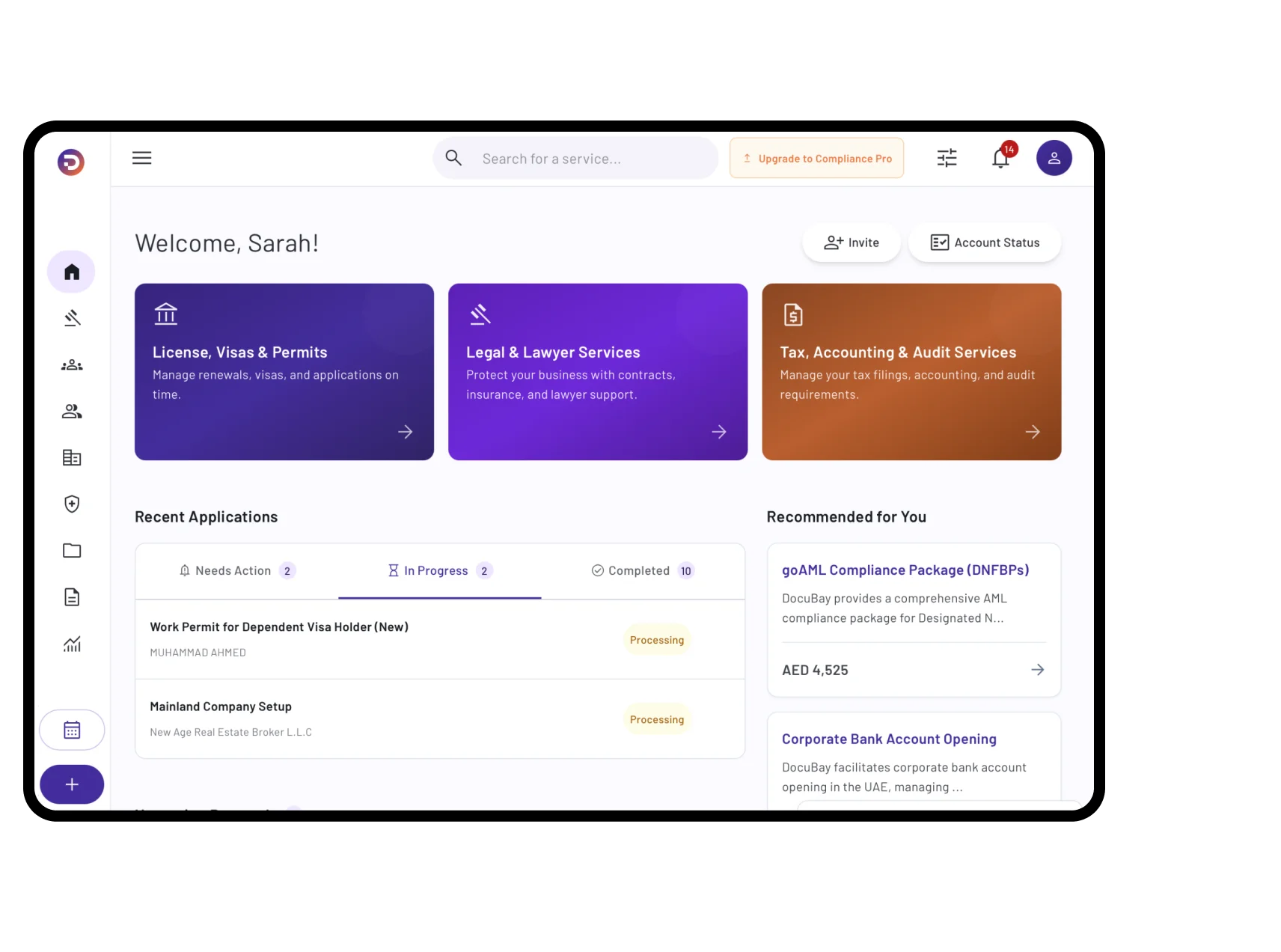

Schedule a demo to explore how DocuBay helps you manage legal, compliance, and business operations through one structured platform.