
Why DocuBay

Services

License & Compliance Management


Workforce & Employment

Permits & Approvals

Insurance & Risk Management

Legal Services

Audit, Tax & Accounting

Company Formation


26 Mar 2026
Social Media Permit in the UAE: The Question Many Businesses Ask Too Late
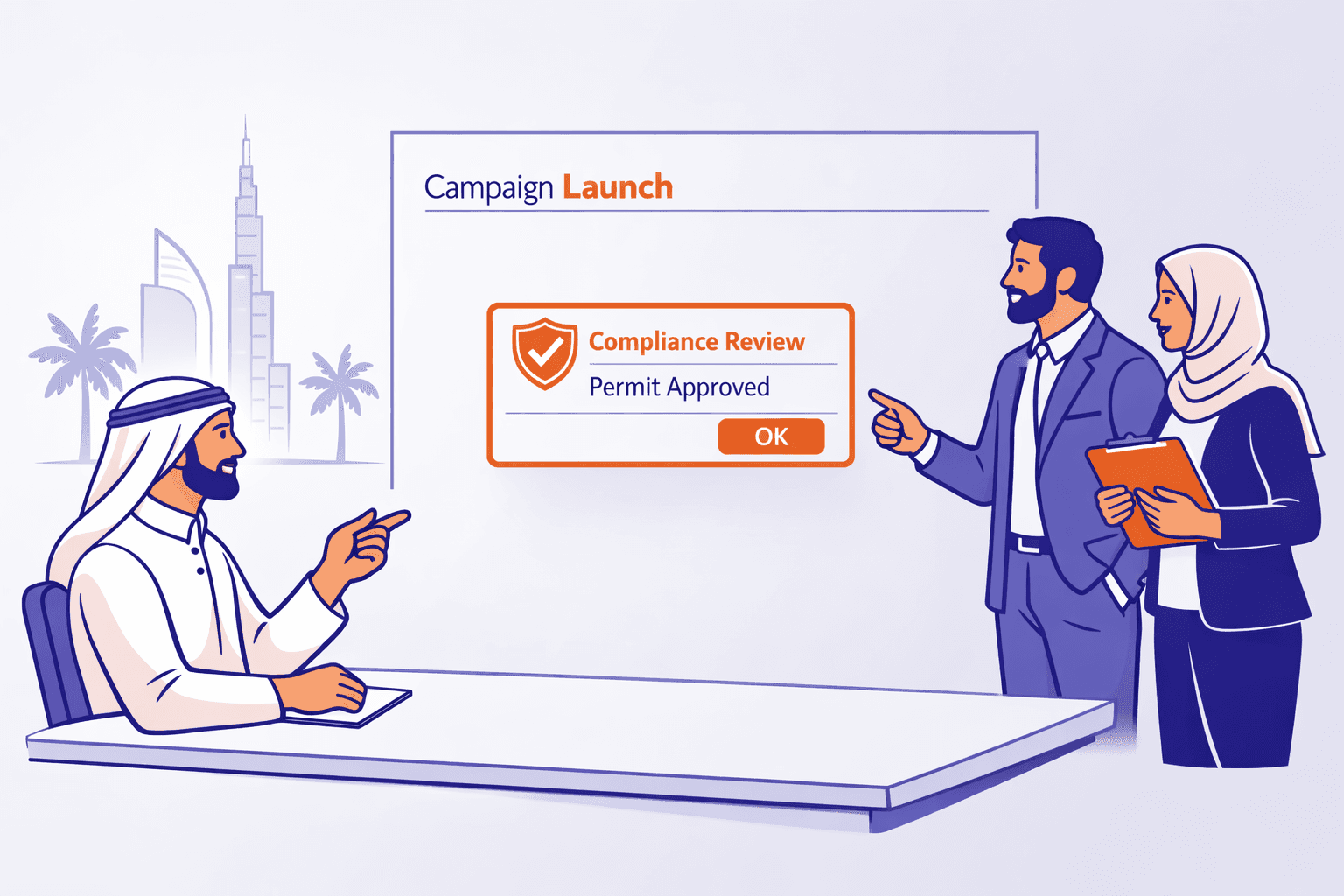
Most campaign delays do not begin with the permit itself. They begin with the question being asked too late.
A launch can be days away from going live before someone finally stops and asks: do we need a social media permit for this?
By then, the content is approved, the creators are briefed, the timeline is tight, and nobody wants compliance to become the reason momentum slows down.
That is what makes this issue easy to underestimate. On the surface, social media still feels fast, creative, and informal. But in the UAE, once content becomes promotional, creator-led, or commercially structured, it can move into a regulated media environment. For businesses, that means what looks like a content decision can quickly become a compliance question.
What the permit actually covers

The starting point is simple: not every business posting on social media needs the same permit.
The UAE framework is aimed at individuals who provide advertising or media content on social media and other digital platforms. There is also a separate route for visitor advertisers, which applies to individuals entering the UAE on a visit visa to provide advertising content.
So the real question for businesses is not just, “Are we posting content?”
It is:
- who is posting
- through which account
- in what capacity
- and as part of what commercial arrangement
That distinction is where many teams lose time.
Why this catches businesses off guard

One of the most common mistakes is treating social media as if it sits slightly outside the normal compliance process.
Contracts are reviewed. Payments are checked. Licences are planned. But social media is often handled as the fast-moving part of the business that should not be slowed down by too many questions.
That is where problems start.
A creator campaign may feel like a routine marketing activation. A founder posting through a personal account may feel like a simple extension of brand visibility. A short visitor collaboration may feel too temporary to trigger much concern. But this is exactly where businesses need to slow down long enough to classify the activity properly.
Where the issue usually shows up
Take a product launch.
A brand lines up three creators. One is paid. One is doing a gifted collaboration. One is posting through a personal account because the engagement is stronger there than on the brand’s own page.
Internally, this still feels like marketing. But this is usually the moment when “content planning” turns into a permit question.
Or take a founder promoting a business through a personal account. That may sound risky at first, but the framework includes an exemption for individuals promoting their own products or services — or those of a company they own — through their personal accounts.
Then there is the visiting creator scenario. A hospitality or retail brand brings in a creator for a short campaign and assumes the temporary nature of the visit makes the compliance side lighter. In practice, visitor cases follow a separate permit route and need to be handled correctly from the outset.
Do businesses always need the permit?
No. But many businesses are closer to the issue than they think.
If a company is posting only through its own official brand account, that does not automatically place it in the same category as an individual creator publishing advertising content through a personal platform.
But once a campaign involves:
- influencers
- ambassadors
- freelancers
- founder-led promotion
- or visiting creators
the permit question moves much closer. This is why the issue is not really whether the business is posting content. The issue is whether the structure of the campaign brings the permit framework into play.
The questions businesses usually want answered

How long does it take?
The safer approach is not to rely on assumptions. Processing times and requirements can change, so businesses should confirm the current route and timing before launch planning becomes too tight.
How much does it cost?
For resident cases, the required permit starts from an official government fee, with the total cost increasing if application support or managed compliance assistance is involved. Because service charges and bundled support costs can change over time, businesses should confirm the current applicable amount before applying.
Can businesses apply directly?
Some can. Others may need support identifying the correct path, preparing documents, or handling more specific cases such as visitor advertisers.
What is the real risk?
Usually, it is not the permit itself. It is delay, uncertainty, or having to rework a campaign because the compliance question surfaced too late.
What businesses should take away from this
The real issue here is timing.
A founder post, a creator collaboration, or a short promotional campaign can all feel routine in modern marketing. That is exactly why permit questions are easy to miss. They arrive dressed as content decisions when, in practice, they may need to be treated as compliance decisions.
That is the practical takeaway: raise the permit question early, while there is still room to choose the right route and keep the campaign on track.
How DocuBay helps
For most businesses, the challenge is not the existence of the rule. It is the uncertainty around it — the wrong assumption, the missing document, the delayed decision, the last-minute scramble when the campaign is already under pressure.
DocuBay helps businesses handle that process with more structure, visibility, and control across permits, approvals, and compliance workflows.
If your next campaign involves creators, branded content, or promotional activity through personal accounts, it is worth checking the likely permit route before the launch gets too close.
Need help with social media permits?
Speak with a DocuBay specialist or explore the platform to see how we can help streamline your compliance and business workflows.
Featured
⎯ Articles
Social Media Permit in the UAE: The Question Many Businesses Ask Too Late
Most campaign delays begin with the permit question being asked too late. Learn when UAE businesses need a social media permit.
Read about social media permits

Common Legal Mistakes Small Businesses Make in the UAE
Learn the six most common legal pitfalls UAE SMEs face — from weak contracts to missed deadlines — and how to avoid them.
Read about legal mistakes
E-Invoicing in the UAE: A Practical Guide for SME Owners
E-invoicing in the UAE is more than a technical change. Learn what the 2027 mandate means for SMEs and how to prepare your business.
Read the e-invoicing guide
Bring More Control
to Your Business
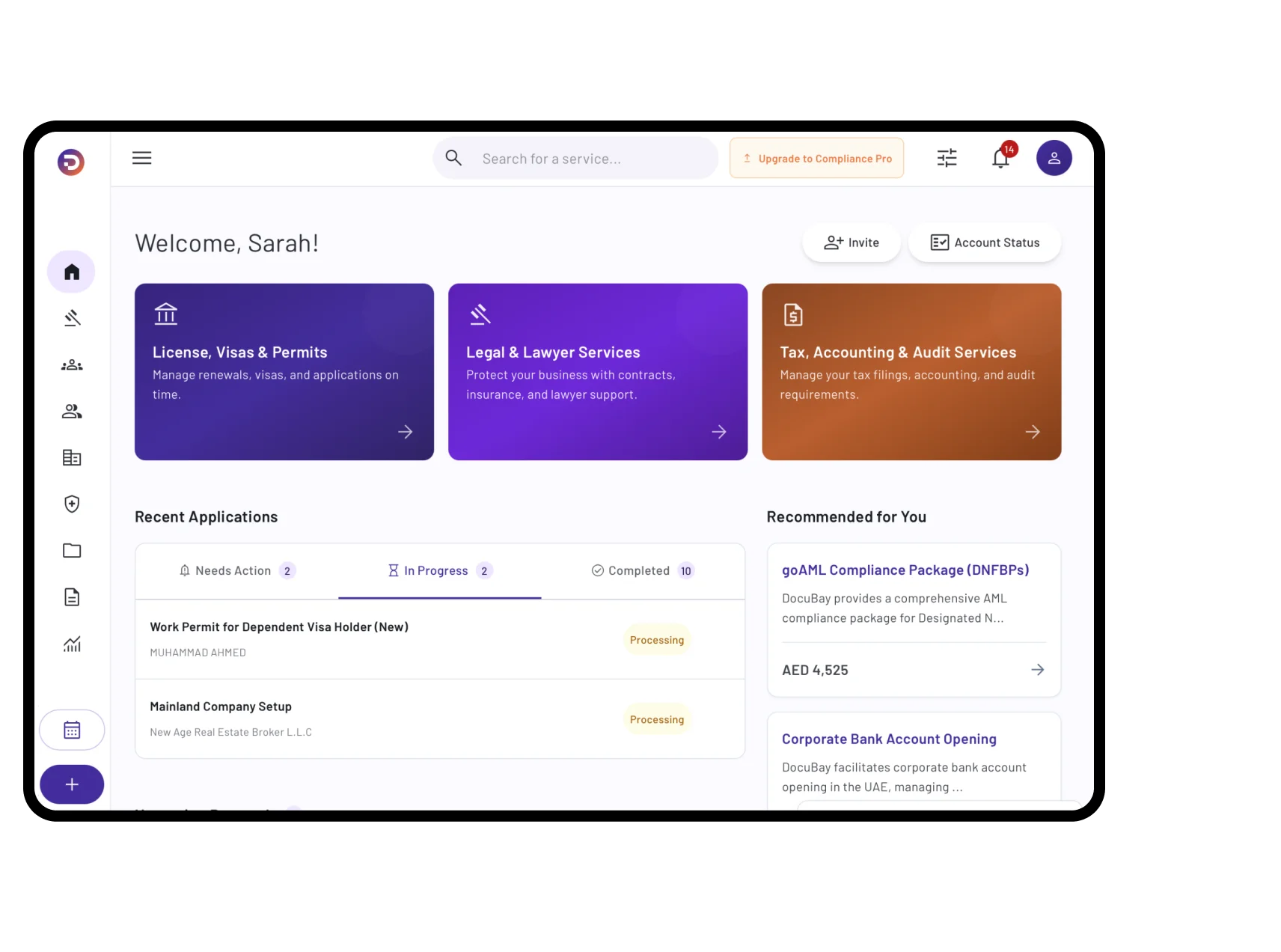

Schedule a demo to explore how DocuBay helps you manage legal, compliance, and business operations through one structured platform.